01
Stay connected
Call and communicate with people their parents approve.
Designed for ages 8–11
A simple, voice-first watch that helps kids stay connected, get help, explore their curiosity, and do more on their own, without giving them a smartphone.

Concept in development
A premium device for the years between no personal device and a first smartphone.
Going downstairs on their own.
Staying after school for practice.
Walking over to a friend's house.
Waiting for you at pickup.
Doing a little more without you right beside them.
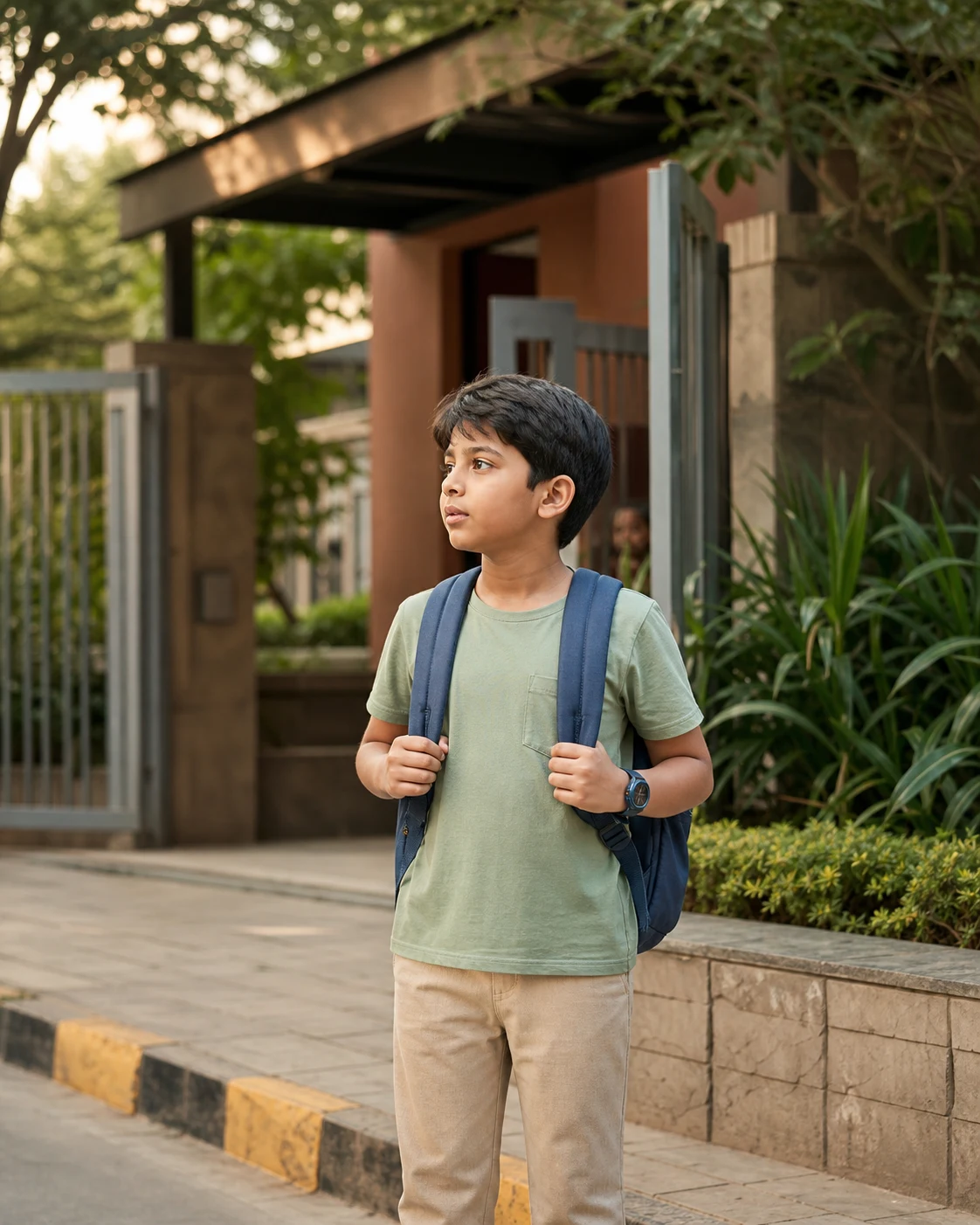
They need a way to reach you.
That doesn't mean they need a smartphone.
ABLE is built for the years in between.
01
Call and communicate with people their parents approve.
02
Use natural voice to ask questions and get help without navigating apps, browsers, or search results.
03
Get reminders for homework, sports gear, pickup times, routines, and everyday responsibilities.
04
Get simple help navigating everyday situations and staying connected to home when they need it.
Instead of giving kids a screen full of apps and expecting them to navigate it themselves, ABLE lets them simply use their voice.
Voice-first AI helps with everyday questions and tasks, within boundaries set by parents.
ABLE
Listening
How can I help?
Smartphones are useful, but many 8–11-year-olds don't need one yet.
The screen is there when they need it.
Not to keep them there.
ABLE gives curious kids a way to ask about the world around them without handing them the whole internet in their pocket.
“Why do airplanes leave white lines?”
“How far away is the moon?”
“What's the difference between a leopard and a cheetah?”
“What does this word mean?”
Ask. Understand. Keep going.
Parents choose approved contacts.
Parents control important permissions.
Quiet and school periods can reduce interruptions.
Capabilities can evolve as the child grows.
Concept features shown. Final functionality may evolve during development.
Kids become capable of more long before they're ready for everything that comes with a smartphone.
ABLE is designed for that space in between: enough connection, help, and capability to let their world get a little bigger.
More able. More world.

Early access
We're currently developing the first ABLE prototype and speaking with parents of children ages 8–11.
If this is a stage your family is approaching, we'd love to have you follow along.
No. ABLE is intentionally being designed around a narrower set of things children need from a connected device.
Voice lets kids do common things without navigating complex menus, keyboards, browsers, or app grids.
Yes. We're exploring voice-first AI for questions, reminders, everyday help, and other child-appropriate interactions.
That is part of the product direction. Parent-defined boundaries and approved communication are core to the concept.
Not yet. We're currently building and testing the first prototypes.
We're initially designing ABLE primarily for children ages 8–11.